Security Bollards For Sale And Installation Choices
Property owners and project teams can compare many ways to manage vehicle access. The first source lists 1 to 54 of 58 results, with products for different sites and needs. 1-800-Bollards says it has supplied these products since 2008.
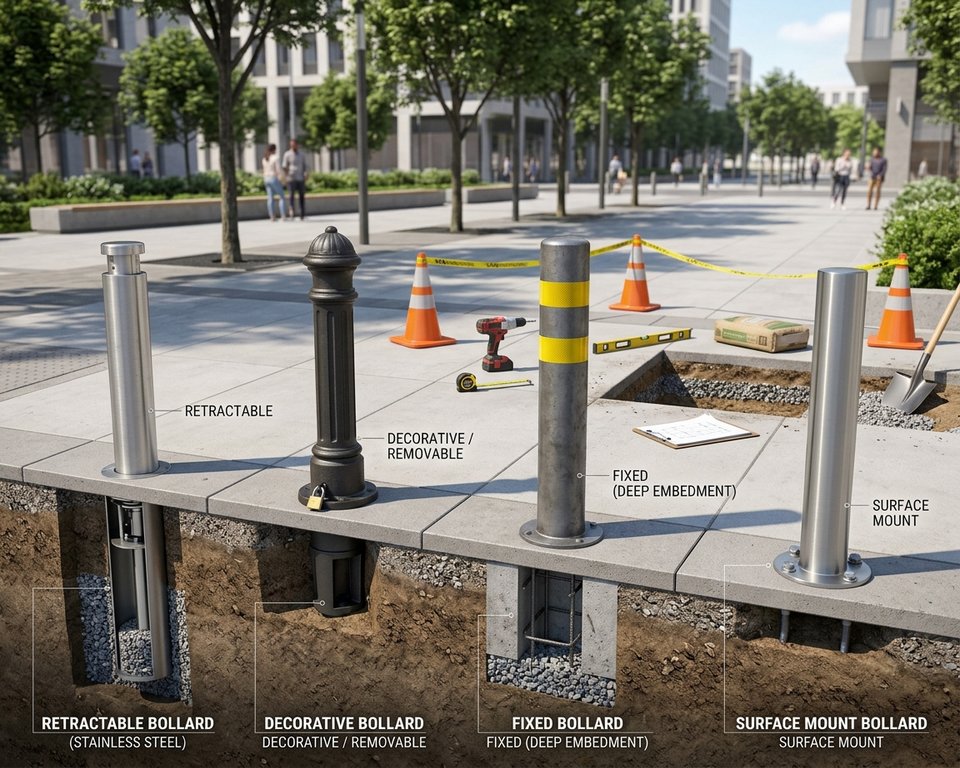
A well-chosen bollard is able to add protection, guide traffic, and help separate vehicle and pedestrian areas. Product types include fixed, removable, retractable, decorative, and safety models. Each serves a different purpose, so begin with how people and vehicles move through your site.
Buy Bollards
Compare dimensions, materials, stock availability, and installation needs before you purchase. Methods include surface mounting, core drilling, embedding, and temporary placement. The right choice depends on the surface, the level of security needed, and whether site needs may change. A careful match can make a project safer and easier to manage.
Key Takeaways
- According to the first source, the displayed listings cover results 1 to 54 out of 58.
- Choose among fixed, removable, retractable, decorative, and safety styles.
- Installation methods include surface mounting, core drilling, and embedding.
- Temporary placement is able to suit changing site needs.
- Check size, material, availability, and site conditions before choosing.
Shop Security Bollards For Sale By Type
Choose a design based on how often a vehicle route must open. Fixed units mark a boundary, while removable, retractable, and collapsible products allow more access control. Listings cover removable and retractable lines, as well as a $236.95 collapsible model.
 Security Bollards
Bollards With Fixed, Retractable, Or Removable Designs
A 4-inch by 36-inch bolt-down steel bollard costs $220.95 and uses a plate at the surface. A 2-inch by 32-inch threaded-base stainless steel bollard names at $170.95. Removable bollards suit changing entry needs: the yellow powder-coated 4-inch model is $494.95, while its stainless steel version is $607.95.
Choosing Between Embedded And Surface-Mounted Bollards
The first source calls bolt-down products heavy-duty and surface-mounted. Another listing shows an embedded 4.5-inch by 42-inch removable model set into concrete. A 4-inch by 32-inch galvanized threaded-base option costs $241.95; its base differs from a bolt-down plate.
Crash-Rated And Rebounding Bollards
Crash ratings are assigned to the C40 and K4 products. SlowStop® rebounding models come in 3-, 4-, 5-, and 6-inch pipe sizes. These options serve different needs, so check product details and site conditions before choosing.
Review Bollard Materials And Finishes
Both the appearance of an entrance and the product’s suitability for that location depend in part on its material. Compare finish, size, and setting before choosing from the available options.
Steel Bollard Options With Stainless, Galvanized, Or Powder-Coated Finishes
A stainless steel bollard can offer a clean, polished look. Galvanized and powder-coated steel provide other finish choices, with products in several sizes. One 4-inch by 32-inch powder-coated model costs $258.95. A 5-inch by 42-inch galvanized model is listed at $389.95.
Match the material, finish, and dimensions to the place where the unit will stand.
Concrete And Wood Bollard Choices
Concrete designs can add a strong architectural feature. The catalog names a Brooklyn rectangular model at $483.95 and a dome-top design at $509.95. Wood provides a different visual character: an embedded Douglas fir model costs $699.95, while pine is $629.95. Check the intended location before selecting a concrete or pipe-based design.
Compare each product’s material, finish, dimensions, and placement as a group. This helps narrow options for both practical and visual needs.
| Material | Listed example | Price | Form Or finish |
|---|---|---|---|
| Steel | 4-inch by 32-inch model | $258.95 | Powder-coated |
| Details: Steel | 5-inch by 42-inch model | $389.95 | Details: Galvanized |
| Details: Concrete | Details: Brooklyn rectangular / dome-top | Listed as $483.95 / $509.95 | Details: Architectural shapes |
| Details: Wood | Details: Douglas fir / pine | $699.95 / $629.95 | Details: Embedded square |
Review Bollard Installation Options
Costs, access arrangements, and required site work depend partly on the chosen mounting method. Check the ground and traffic needs before choosing an installation style.
Installing A Surface-Mounted Bollard Using A Base Plate
A surface-mount unit uses a plate and anchors attached to the existing slab. This approach is able to limit excavation, but the slab must suit the product. Compare it with the embedded removable bollard, listed at $649.95, which sits below ground in concrete.
Embedding Bollards Through Core Drilling
Offered methods cover surface mounting, core drilling, embedding, and temporary placement. Core-drilled guard pipe is described as an option for maximum outdoor protection, so review soil, drainage, and other site conditions before work begins.
Embedded components vary by size. The receiver costs $449.95 for 4-inch pipe, while the version for 6-inch pipe is $549.95. Verify the location, substrate, and product configuration prior to choosing an approach.
“A sound installation starts with the site, not just the product.”
Find out whether the existing slab can support the anchors, or whether excavation and a steel assembly make more sense. These details help narrow the right fit.
Select The Most Suitable Bollard Size And Strength
Sizing begins with the space a post must occupy and the work it must do. Typical bollards range from 3 to 12 inches in diameter. Compare those sizes with offered heights and the needs of the site.
Listed examples show how dimensions and materials can vary. An embedded 4-inch by 72-inch steel pipe model costs $169.95. The listed price is $339.95 for a galvanized model measuring 6 inches by 84 inches. The catalog also names steel pipe products in 6-foot and 7-foot heights.
- A steel bollard may suit one location, while a stainless steel bollard may better match another setting.
- Examine the product specifications, site plan, and intended make use of prior to selecting posts.
Although diameter and height both contribute, neither dimension alone determines strength. The location, ground conditions, and level of impact resistance needed all matter. Examine each product’s specifications, including those for stainless steel and steel models.
Compare the available options with the project plan. *A size that fits the site and its demands can make the final choice more practical.*
Use Bollards To Protect Vehicles And Control Traffic
Clear boundaries help drivers and pedestrians share a site with less confusion. A well-placed bollard can guide traffic, mark restricted areas, and add protection near entrances. Use actual driving routes, pedestrian paths, and the busiest areas of the property when designing the layout.
Protecting Building Boundaries, Walkways, And Driveways
Removable models can open or close access at driveways and walkways as site needs change. Fixed steel posts might suit building edges, loading zones, or other areas where vehicles should not enter. Place each unit with enough room for people to pass safely.
Perimeter planning should account for buildings, assets, and people, not just the vehicle boundary. Before choosing a bollard, map turning paths and note where pedestrians cross or gather. This helps show where bollards can guide movement and protect key areas.
- Identify where vehicles enter and where pedestrians walk.
- Identify areas that need a clear boundary.
- Select removable or fixed units to match day-to-day access needs.
A simple site plan can make placement clearer and help each post serve a practical purpose.
Explore Bollard Covers For A Finished Appearance
A clean finish can help a perimeter installation look complete. One source describes Type 304 stainless steel bollard covers as a finishing detail for perimeter projects. This material is able to suit sites where a neat, consistent appearance matters.
Consider these bollard covers alongside the post material and its location. Check how the finish will look near building features, walkways, and other site elements. A cover is a finishing component, so it ought to fit the underlying bollard and the project’s visual goals.
Appearance is only one factor. Examine the material and care needs before adding covers to a planned or completed installation. The source lists “Stainless Steel Bollard Cover Care: What Facility Managers Should Know,” published November 14, 2025.
- Confirm the cover fits the post dimensions.
- Choose the material and surface finish according to where it will be used.
- Evaluate maintenance requirements before fitting the product.
A thoughtful finish can provide a practical site plan together.
Selecting Bollards For Public And Commercial Locations
Each property has different needs, from busy storefronts to campus walkways. Since 2008, the supplier has served retailers, stadiums and arenas, municipalities, government premises, religious institutions, and colleges and universities.
Protect Retail, Industrial, And Institutional Properties
Commercial and public teams is able to compare steel and concrete by site function, appearance, and protection needs. The catalog includes rectangular, tapered, dome-top, and planter designs. These forms is able to suit varied settings, from civic areas to retail entrances.
“Plan each boundary around the people and vehicles that use the site.”
Plan Pedestrian Access And Vehicle Entry
Map traffic routes, walking areas, and entry points before choosing a bollard. Removable bollards can allow or restrict access in driveways and walkways. This coordinated plan helps decrease conflicts between vehicles and pedestrians at industrial, retail, and institutional properties.
| Property setting | Product detail | Details: Planning focus |
|---|---|---|
| Arena Or retail | Steel posts or planter designs | Entry flow and storefront edges |
| Municipal or campus | Rectangular or tapered concrete | Public areas And walkways |
| Details: Industrial site | Fixed or removable units | Vehicle routes and pedestrian zones |
Check Product Availability, Costs, And Custom Choices
Before ordering, examine the listing specifics and price. The first source displays 1 to 54 of 58 results, with listed prices from $89.95 to $1,770.95. The range reflects distinctions in product type and setup.
Compare dimensions, material, mounting style, and listed variants. A stainless steel finish, pipe size, or base setup can influence cost. Confirm the exact configuration and current stock with the seller.
If a standard bollard does not fit the project, inquire about a custom create. The second source states it is able to make bollards in typical diameters from 3 to 12 inches. It also provides pipe sleeves for its models and indicates that both are manufactured in the USA.
Check current availability and pricing for products such as bollard covers and other posts before checkout. A quick confirmation can help prevent a mismatch between your quote and the item you need.
| Detail | Published information | What to verify |
|---|---|---|
| Catalog range | 1 to 54 of 58 results; $89.95 to $1,770.95 | Current stock and price |
| Details: Custom sizing | Details: Typical diameters from 3 to 12 inches | Dimensions and build details |
| Accessories and origin | Pipe sleeves offered; made in the USA | Model fit and availability |
Coordinate Professional Bollard Installation
Good project coordination begins with clear site specifics. Confirm ground conditions and the required method before choosing a surface-mounted, embedded, or core-drilled product. Discuss the project’s access, drainage, and concrete requirements with the team.
Verify Site Conditions And Requirements
Review the planned location, the existing slab, and nearby utility lines. Verify whether the selected steel unit, pipe, and base suit the site plan. Some in-stock items can ship immediately, according to the third source, but verify lead times and project needs before ordering.
Review Specifications And Drawings
Make use of the third source’s CSI specifications, CAD specifics, PDF drawings, BIM drawings, and cut sheets during coordination. These files help teams compare dimensions, materials, and mounting details before ordering bollards. The first source also lists “Site Work and Concrete Standards for Bollard Installation,” dated September 23, 2025, as a planning resource.
Reviewing these specifics early can help limit delays and product mismatches.
| Planning resource | Offered detail | Project make use of |
|---|---|---|
| Details: Project documents | Cut sheets, bIM, pDF, cAD, and cSI | Materials And compare sizes |
| Details: Site work guide | Details: Dated September 23, 2025 | Concrete needs And review site |
| Details: Stock status | Some items may ship immediately | Verify timing before ordering |
Find The Right Bollards For Lasting Property Protection
A dependable site plan begins with the way each entry works day to day. Match bollards by type, material, size, and mounting method to ground conditions and the level of protection the property needs.
Choices cover fixed, removable, retractable, embedded, surface-mounted, crash-rated, and rebounding models. Choose steel, finish, and covers to suit the setting, while keeping clear paths for people and vehicles. 1-800-Bollards pinpoints itself as a Women’s Business Enterprise-certified supplier and states it has served customers since 2008.
Before ordering, review product specifications, confirm availability, and coordinate installation details with the project team. These checks help the selected system meet its intended use and support site security. Plan around daily movement as well as long-term needs.